
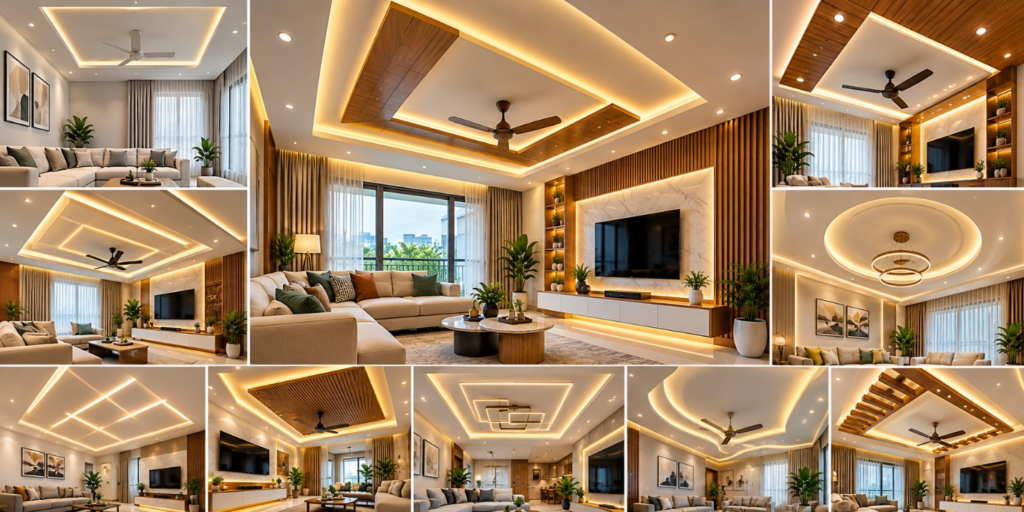
A well-designed ceiling can completely change the appearance of your living room. From simple designs with soft lighting to elegant layered patterns, a false ceiling adds style while improving the overall ambience of your home. For homeowners planning Home Interior in Chennai, choosing the right false ceiling design can help create a modern, comfortable, and visually appealing living space without making it look overcrowded.
1.Simple False Ceiling Designs for Modern Homes
Simple false ceilings are ideal for homeowners who prefer a clean and uncluttered look. Straight lines, subtle borders, and recessed lighting can make a living room appear elegant without drawing too much attention to the ceiling.
These designs work particularly well in apartments with standard ceiling heights. White and light-coloured finishes help maintain a bright, spacious feel, while minimal detailing keeps the overall design timeless.
2.POP False Ceiling Designs
Plaster of Paris (POP) is a popular choice for creating decorative ceiling patterns. It can be shaped into geometric designs, curved borders, and layered structures to suit different interior styles.
A POP false ceiling can add character to a plain living room, especially when paired with carefully positioned lights. However, the design should suit the room’s dimensions. Excessively detailed patterns may make a compact space feel smaller, so a balanced approach is often best.
3.Cove Lighting for a Warm Ambience
Cove lighting creates a soft glow by concealing LED strips within a ceiling recess. Instead of producing harsh direct light, it spreads illumination across the ceiling and walls, creating a relaxing atmosphere.
Warm white lighting is suitable for cosy family spaces, while neutral white lighting can create a brighter, contemporary appearance. Cove lighting also works well alongside pendant lights or recessed spotlights when each fixture serves a clear purpose.
4.Wooden False Ceiling Designs
Wooden finishes can bring warmth and texture to a living room. You can use wooden panels, decorative beams, or wood-finish ceiling strips to complement furniture, flooring, and wall panelling.
For modern apartments, a wooden accent above the seating area can create a stylish focal point without covering the entire ceiling. When selecting materials, consider maintenance, ventilation, and resistance to local humidity.
5.Layered False Ceilings for a Premium Look
Layered ceilings use two or more levels to create depth and visual interest. They can help define different areas in an open-plan living and dining space while providing room for concealed lighting.
For example, a rectangular ceiling border above the living room seating area can distinguish it from the dining section. Keep the number of layers proportionate to the ceiling height to preserve a comfortable sense of space.
6.Geometric Ceiling Designs
Square, rectangular, and linear ceiling patterns suit contemporary homes. These designs pair well with modern furniture, neutral colours, and clean architectural lines.
Geometric patterns can also be used to highlight a specific area, such as the centre of the living room or the space above a coffee table. Avoid too many overlapping shapes, as they may compete with other decorative elements.
7.Choose the Right Ceiling for Your Living Room
Before finalising a design, consider the room’s size, ceiling height, lighting needs, and existing interior style. A compact living room usually benefits from a simple ceiling with limited layering, while a larger space may accommodate more decorative features.
Homeowners exploring Home Interior in Chennai should also consider heat, humidity, ventilation, and ease of maintenance when selecting ceiling materials and lighting fixtures. A practical design should look attractive while remaining suitable for everyday use.
It is equally important to plan electrical points and lighting positions before installation. This helps avoid unnecessary modifications and ensures that the finished ceiling meets your functional requirements.
8.Plan Your False Ceiling with the Right Interior Design Approach
A false ceiling should complement the living room rather than dominate it. Match the design with your furniture, wall colours, curtains, and lighting to create a consistent appearance.
Dream Kitchen Interior helps homeowners explore interior design ideas that balance appearance and functionality. If you are planning Home Interior in Chennai, consider how your ceiling design will work with the rest of your home before making a final decision.
A thoughtfully planned ceiling can make your living room feel more welcoming, improve lighting, and bring the entire interior design together. For a cohesive result, choose a design that suits your space, lifestyle, and long-term needs.
Frequently Asked Questions
1.Which false ceiling design is best for a living room?
Simple ceilings with recessed lights or cove lighting are versatile options. The best design depends on your room size, ceiling height, and interior style.
2.Is a false ceiling suitable for a small living room?
Yes. A simple, light-coloured false ceiling with minimal detailing can improve the room’s appearance without making it feel crowded.
3.Which lighting works best with a false ceiling?
LED strip lights, recessed spotlights, and selected pendant fixtures work well when positioned according to the room’s lighting needs.
4.What should I consider before installing a false ceiling?
Consider ceiling height, material quality, ventilation, electrical wiring, lighting placement, maintenance, and the overall interior design.
5.Can false ceiling designs suit traditional and modern homes?
Yes. Minimal geometric patterns suit contemporary interiors, while decorative borders and wooden finishes can complement traditional or transitional styles.
